
Nine steps.
Three client sign-offs.
How a piece gets made, from the grocery list to the serve.
- 01Grocery ListKnow your kitchen before you shop
- 02Menu SketchDeciding what's for dinnerClient sign-off
- 03Test RecipeEvery step, in order, before the heat goes onClient sign-off
- 04PrepMise en place — everything cut, measured, ready
- 05PlateBuilding what the dish sits on
- 06Let Them Cook!Everything on the heatClient sign-off
- 07GarnishThe details that make it look expensive
- 08HandoffEvery plate checked before it leaves the kitchen
- 09ServeFront of house, first table
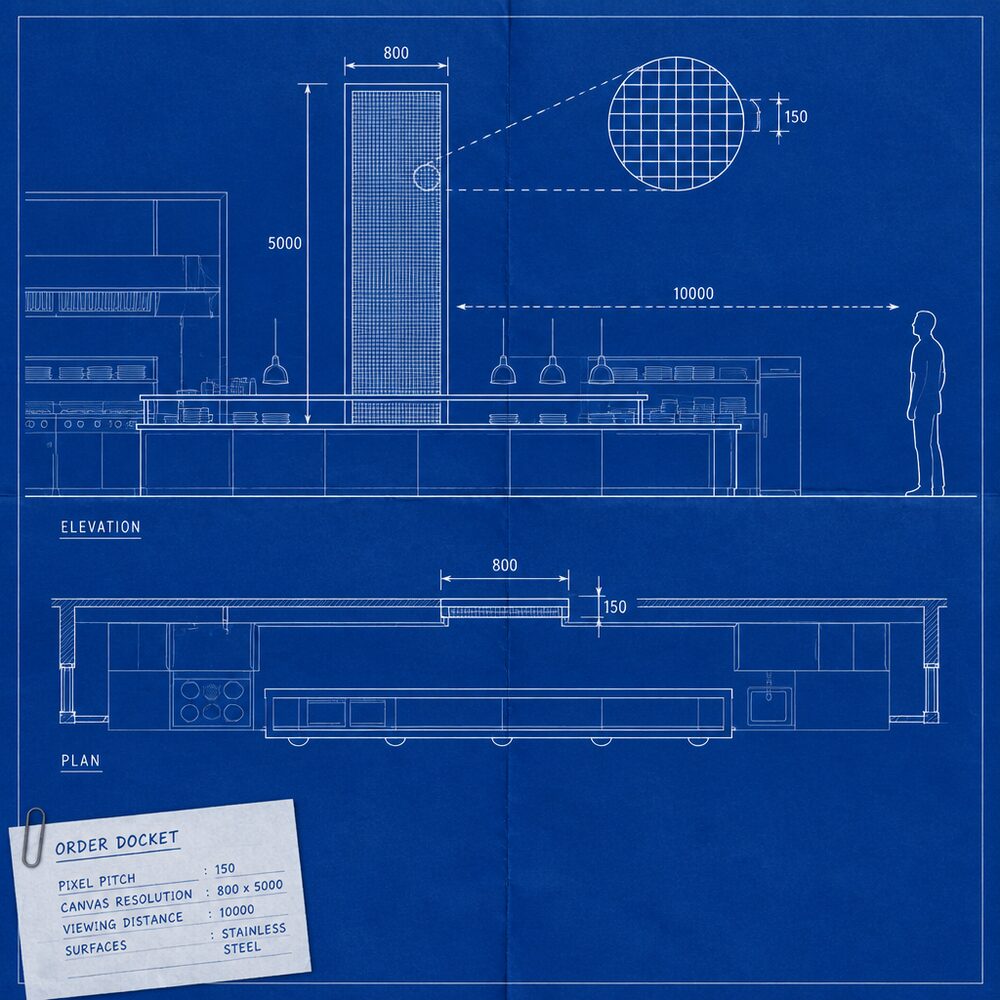 Brief & technical setup
The Grocery List
Know your kitchen before you shop
What happensWe take the exact canvas: pixels, pitch, surfaces, where people stand. If it is a Simtech screen we already have it.
What you doTell us the venue and what the screen is for.
The craft- Pixel map
- Canvas resolution
- Pixel pitch
- Aspect ratio
- Viewing distance
- Sightline study
- Technical spec
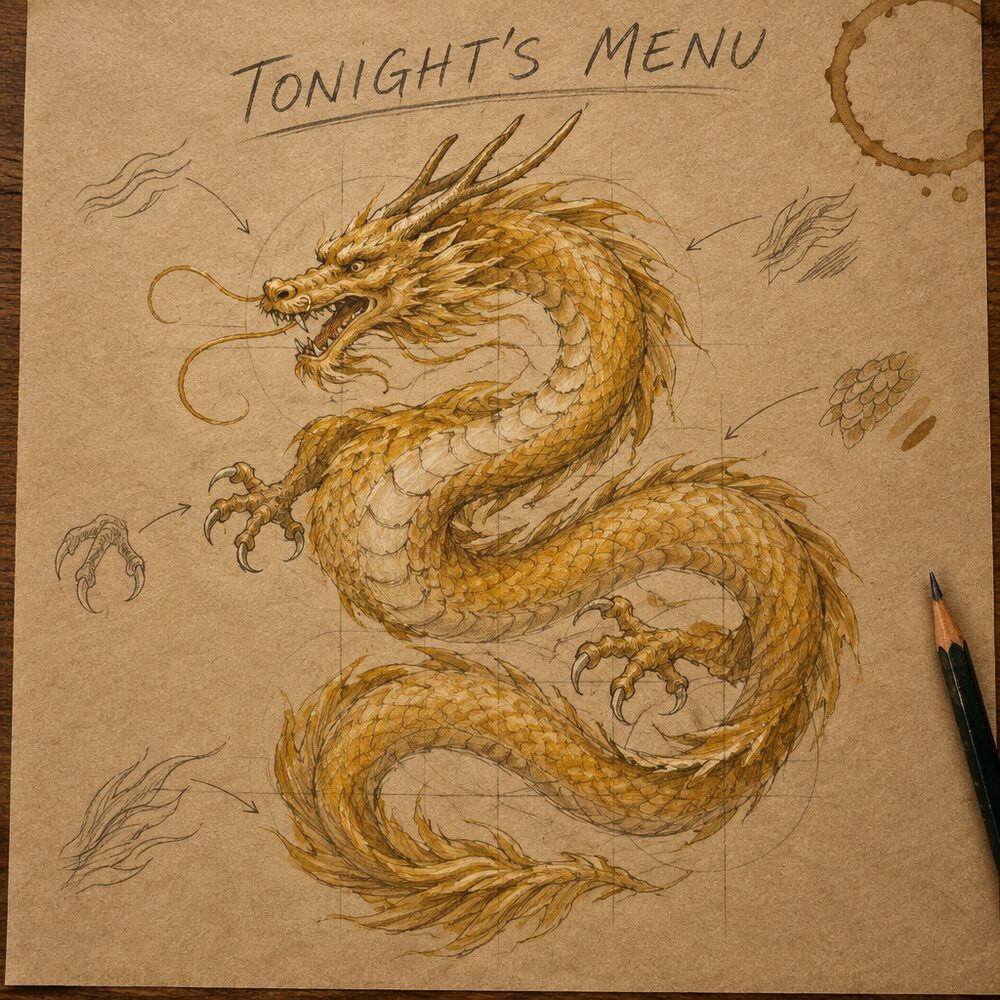 Creative directionClient sign-offTasting 1 · Concept signed off by client
The Menu Sketch
Deciding what's for dinner
What happensRough ideas, references, a direction. Sketches, not renders. This is where the piece is decided.
What you doReact honestly. Cheap to change here, expensive later.
The craft- Concept art
- Mood board
- Reference reel
- Style frames
- Colour script
- Art direction
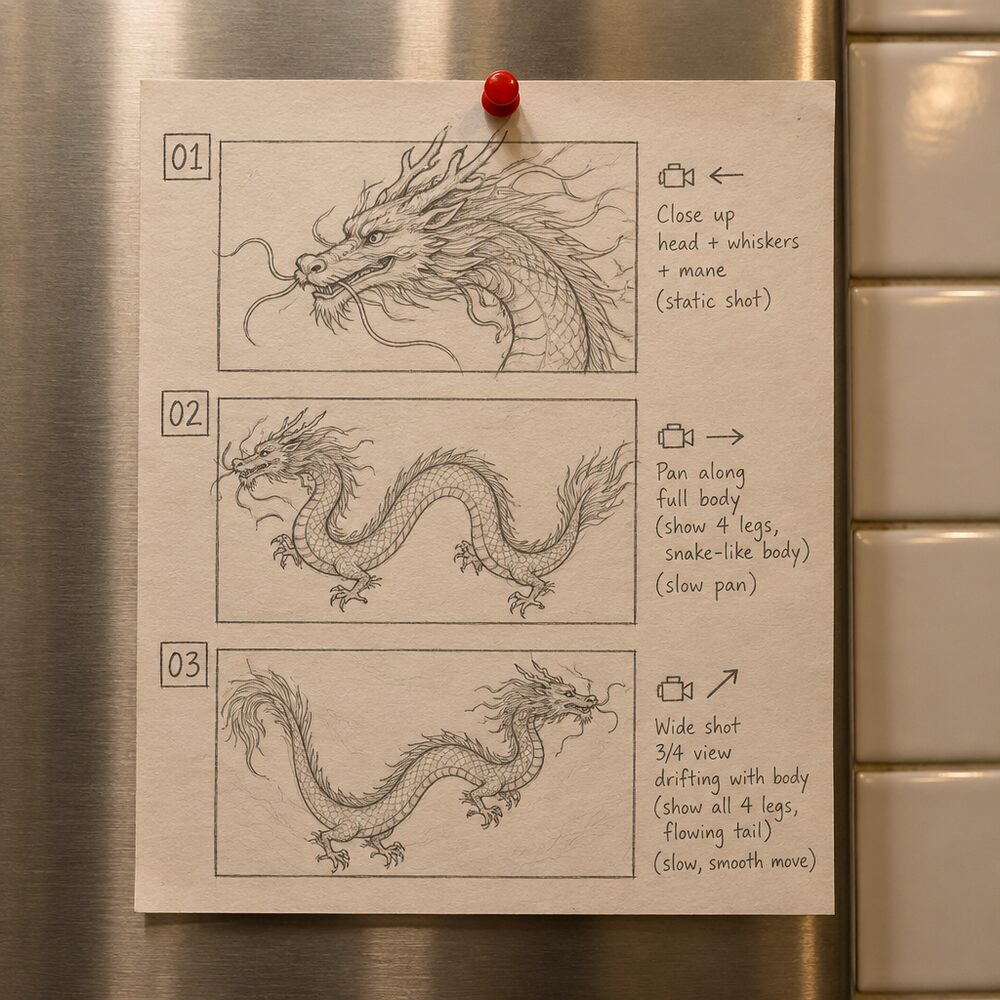 StoryboardClient sign-offTasting 2 · Storyboard signed off by client
The Test Recipe
Every step, in order, before the heat goes on
What happensEvery shot drawn, timed and numbered, in the shape of your screen. What you sign here is what gets built.
What you doSign the recipe. One signature, one chef.
The craft- Storyboard
- Shot list
- Animatic
- Previs
- Camera blocking
- Timing and pacing
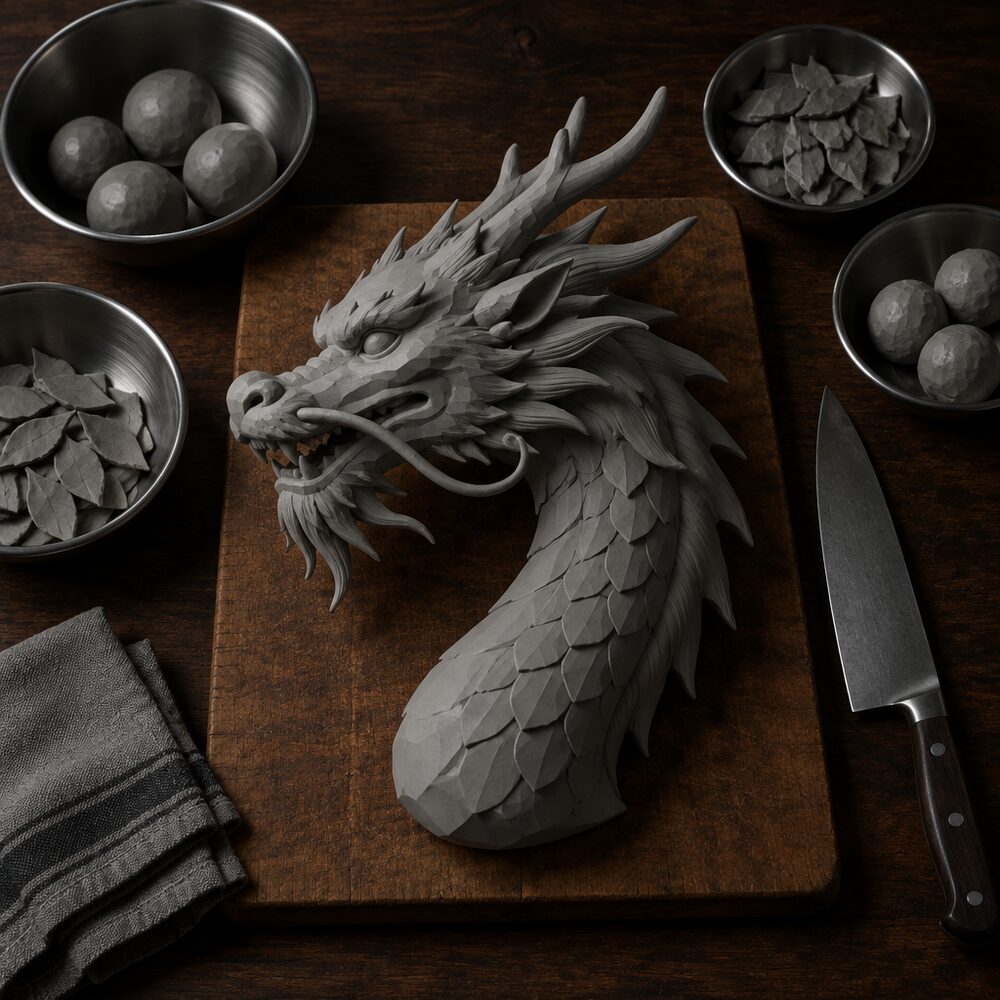 Asset build
The Prep
Mise en place — everything cut, measured, ready
What happensThe creature is sculpted and given its skeleton. This is the expensive part, and the part you keep.
What you doNothing. We will show you the grey sculpt so you can see the form.
The craft- 3D modelling
- Digital sculpting
- Retopology
- UV unwrapping
- Texturing
- Look development
- Rigging
- Skinning
 World build
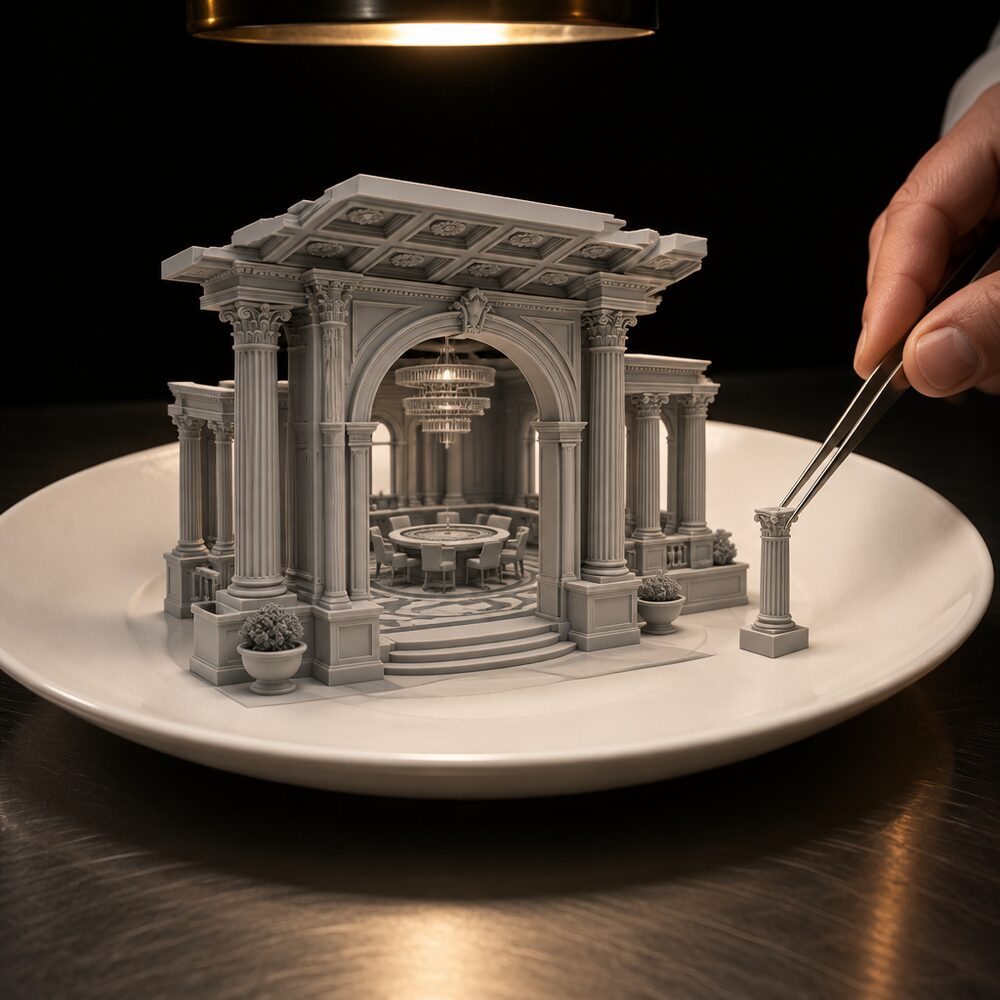
The Plate
Building what the dish sits on
What happensThe world the creature performs in. Architecture, surfaces, props, all still grey.
What you doNothing yet.
The craft- Environment modelling
- Set dressing
- Props
- Materials and shaders
- Scene layout
- Lighting blockout
 AnimationClient sign-offTasting 3 · Final animation signed off by client
Let Them Cook!
Everything on the heat
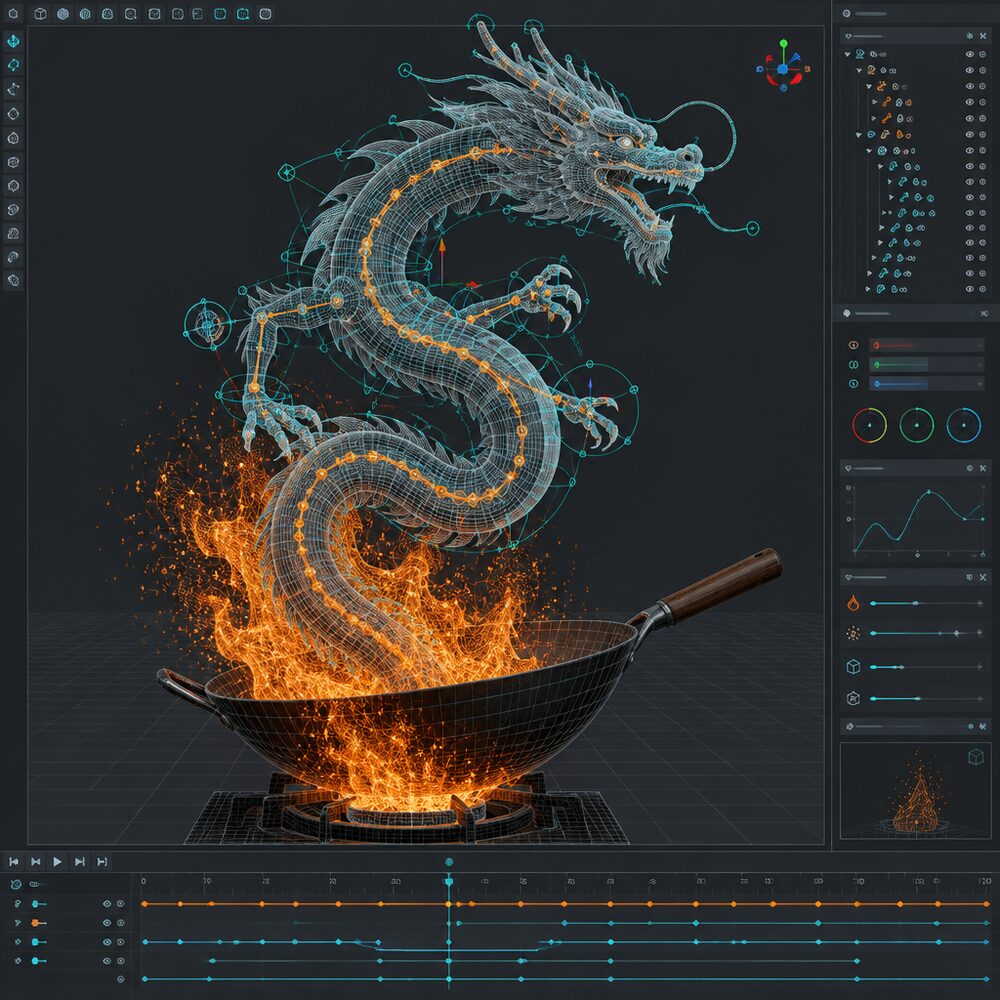
What happensThe creature performs the storyboard. Timing, weight, camera. This is the last point a change is cheap.
What you doApprove the animation. After this, changes mean re-rendering.
The craft- Keyframe animation
- Character animation
- Camera animation
- Anamorphic camera setup
- Weight and timing
- Playblast review
 Simulation & effects
The Garnish
The details that make it look expensive
What happensCoins, fire, water, fabric, particles. Physics that make the piece feel expensive.
What you doNothing.
The craft- Particle simulation
- Rigid-body dynamics
- Fluid simulation
- Cloth simulation
- Volumetrics
- Hair and fur
- FX caching
 Lighting, render & grade
The Handoff
Every plate checked before it leaves the kitchen
What happensLight, materials, colour, final frames at full canvas resolution. Long machine hours.
What you doNothing. Watch the renders come in.
The craft- Lighting
- Shading
- Ray-traced rendering
- Render passes
- Compositing
- Colour grading
- Depth of field
- Motion blur
- Denoising
 Delivery & commissioning
The Serve
Front of house, first table
What happensThe piece goes onto the actual wall and we stand in front of it. Colour, brightness, sightlines, loop points.
What you doBe there if you can. It is the good bit.
The craft- Encoding and codecs
- Pixel-mapped delivery
- Loop points
- Colour calibration
- Brightness and gamma
- On-site QA
- Playback handover
Cheap at the sketch. Expensive at the handoff.
The three client sign-offs exist so that changes happen at the sketch, not after plating.
- Grocery List
- Menu Sketch
- Test Recipe
- Prep
- Plate
- Let Them Cook!
- Garnish
- Handoff
- Serve
- After 02 Concept signed off by client
- After 03 Storyboard signed off by client
- After 06 Final animation signed off by client
30%
of a real twelve-week schedule was client feedback, revision and approval. Twenty-two of seventy-four working days. One approver and consolidated notes is the single biggest thing you can do to protect your date.
Ready to write the grocery list?
Step one is six questions. If it is a Simtech screen, it is one.
Start an enquiry